By Panos Kotzathanasis
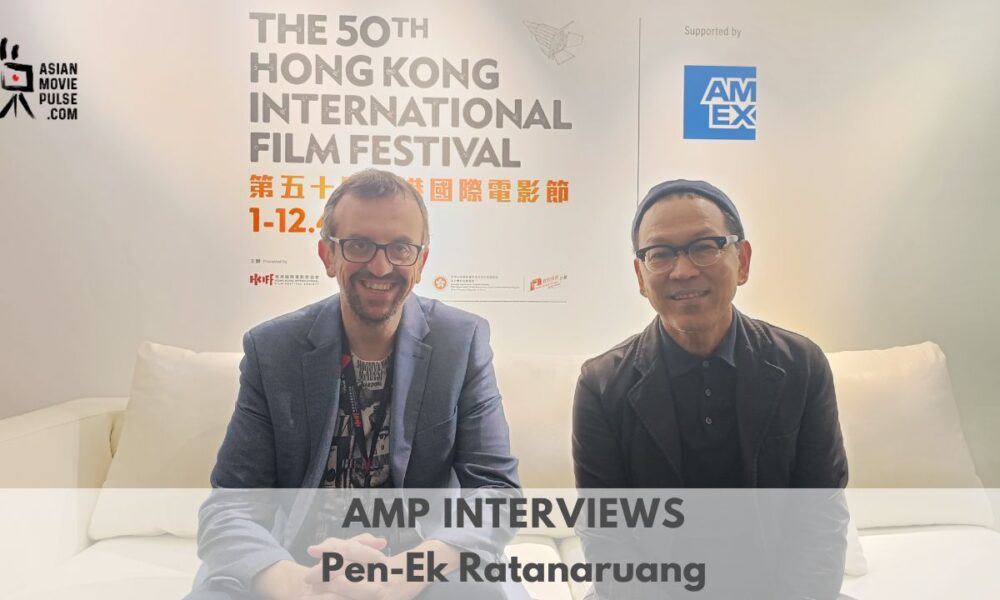
At this year’s Hong Kong International Film Festival, “Morte Cucina” arrives as the latest creation from Thai director Pen-Ek Ratanaruang, a filmmaker long celebrated in international circles yet curiously detached from his own domestic industry. In a candid conversation, he traces the long road that led from lockdown isolation to a story where food can comfort, heal, and quietly kill over fifteen years.

Before “Morte Cucina” took shape, Pen-Ek found himself like many artists during COVID, suddenly unable to shoot movies. He turned to television work and an adaptation of his own earlier piece “69” into a Thai series. At first he only agreed to write. By his own admission he does not watch series and did not think of himself as a creator for the format. But the enforced stillness of the pandemic changed that. Writing six or seven episodes over six months brought him so much pleasure that he finally decided, as he puts it with characteristic dark humour, that if anyone was going to ruin it, it should be him. So he took on directing as well and spent years immersed in long form storytelling, while also exploring printmaking and other visual arts.
The path to “Morte Cucina” began as soon as he finished the script and sent it to his long time French distributor and friend Manuel. A pre-buy from France provided the first seed money, followed by the involvement of sales agent Wild Bunch, which later rebranded as Goodfellas. International funds came in slowly. Some applications succeeded, others did not, and it took roughly two years to assemble the financing for what he describes as a modest one million US dollar production.
This delay fundamentally reshaped the work. Originally the script was written in a straightforward chronological line, following the childhood of the protagonist and moving steadily toward later events. With time on his hands and the project not yet greenlit, Pen-Ek kept rereading. Each return made him more aware of how conventional and even boring the structure risked becoming. Financing partners sent comments, he stepped away, came back, and gradually realised he did not need to treat the story as a single continuous track.
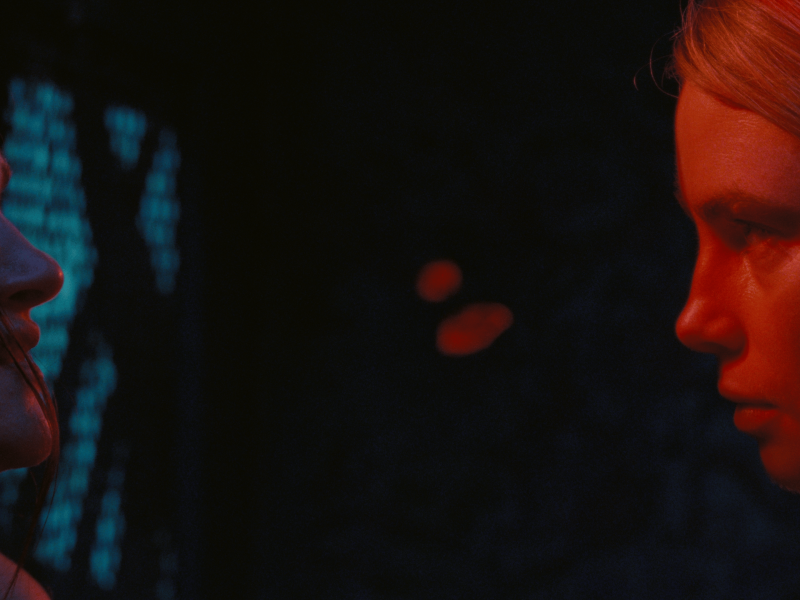
What emerged instead was a two strand narrative built around two women. One is a young girl in the deep South of Thailand who is raped, ostracised by her community, and cast out. The other is an older woman who, for reasons the audience is never fully told, is determined to kill a man slowly through what she cooks for him. Eventually, Pen-Ek’s decided to place both narrative within one character, and by placing these two trajectories side by side and refusing to explain everything, the audience will begin to weave connections in their own minds, creating a more active and mysterious experience.
The restructuring happened on the page rather than in the editing room. He dismantled the original draft, rearranged scenes, wrote new ones and designed the jumps in time and space long before the shoot. Once production wrapped, another form of subtraction began. Many scenes were removed in post, as the team discovered that every cut increased the impact. The less they spelled out, the more enigmatic and compelling the work became. According to the director, this is a story you can almost follow without understanding the dialogue, simply by watching how things unfold.
“Morte Cucina” is also a journey across Thailand and a study of how geography mirrors a character’s rise. We first meet the heroine as a low paid waitress in Bangkok, taking out trash while living in a small flat where the electricity cuts out when it rains. Over time she climbs socially and psychologically until she becomes the commanding presence in a large restaurant. Her clothes, posture, and confidence all change. Pen-Ek describes the project as a vertical movie, one that ascends from low to high.
Locations reinforce this idea. The narrative starts in Songkhla in the far South, moves to Bangkok, and finally reaches Chiang Mai in the North. The South is associated with Thailand’s largest Muslim population, including separatist groups that have historically clashed with the central government. Pen-Ek was careful to show this context without reducing anyone to stereotypes. The young girl who is cast out was born Buddhist and converts to Islam before marriage, a detail that for him underlines how identity can be imposed as much as inherited. The southern community is portrayed as strict, especially concerning women and sexuality, and the landscape itself is rougher and harsher than what we see later in Chiang Mai’s softer greens.
Visually, each section of the story is differentiated. Many critics at festivals like San Sebastian and Tokyo assumed that the southern sequences had been shot on 16mm. In reality everything was captured digitally, but Pen-Ek and renowned cinematographer Christopher Doyle created a grainier, more abrasive look through camera work and grading. Early in development they even discussed shooting entirely on celluloid, yet the lack of a functioning lab in Thailand made that impossible. Processing abroad and waiting for dailies would have made the production unmanageable, so they chose digital and leaned on lighting and colour science to separate each chapter.
“Morte Cucina” marks another entry in the long and sometimes tumultuous collaboration between Pen-Ek and Doyle, after earlier works such as “Last Life in the Universe” and “Invisible Waves”. Two decades ago the pair often clashed on set while they figured each other out, sometimes loudly. Age has softened the dynamic. Today, Pen-Ek jokes that you cannot simply let Doyle do whatever he wants, but he also insists that they now trust each other far more and have left the on set drama behind.
https://googleads.g.doubleclick.net/pagead/ads?gdpr=0&us_privacy=1—&gpp_sid=-1&client=ca-pub-0386741335455016&output=html&h=280&slotname=3071991014&adk=903770801&adf=2720993591&pi=t.ma~as.3071991014&abgtt=6&w=840&fwrn=4&fwrnh=100&lmt=1784180133&rafmt=1&format=840×280&url=https%3A%2F%2Fasianmoviepulse.com%2F2026%2F04%2Fpen-ek-ratanaruang%2F&fwr=0&fwrattr=true&rpe=1&resp_fmts=3&uach=WyJtYWNPUyIsIjI2LjQuMCIsImFybSIsIiIsIjE1MC4wLjc4NzEuMTE1IixudWxsLDAsbnVsbCwiNjQiLFtbIk5vdDtBPUJyYW5kIiwiOC4wLjAuMCJdLFsiQ2hyb21pdW0iLCIxNTAuMC43ODcxLjExNSJdLFsiR29vZ2xlIENocm9tZSIsIjE1MC4wLjc4NzEuMTE1Il1dLDBd&dt=1784190021130&bpp=1&bdt=56&idt=32&shv=r20260715&mjsv=m202607100101&ptt=9&saldr=aa&abxe=1&cookie=ID%3D301b2b892e539e04%3AT%3D1784189630%3ART%3D1784190021%3AS%3DALNI_MZkxLOsEnrWe3QpyXfEpotNgnG9lw&gpic=UID%3D000014c353f5b7c9%3AT%3D1784189630%3ART%3D1784190021%3AS%3DALNI_MYERXMUpgHO2NuTgu0jqzVPcUu9Sg&eo_id_str=ID%3D095ad8b4af4e36a5%3AT%3D1784189630%3ART%3D1784190021%3AS%3DAA-AfjbKrjv7G7oyFLzqeBlXw7sM&prev_fmts=0x0%2C1200x280%2C1470x801%2C728x90&nras=4&correlator=3017124850363&frm=20&pv=1&u_tz=480&u_his=2&u_h=956&u_w=1470&u_ah=923&u_aw=1470&u_cd=30&u_sd=2&dmc=16&adx=115&ady=4337&biw=1470&bih=801&scr_x=0&scr_y=1144&eid=31099679%2C95396138%2C31099698%2C95390278%2C95396252&oid=2&psts=AOrYGslbbHSokUGXputf7PiqyZXJ_EQfVQIr4Ur8Zp3lMz1t0I3QhcKz58gq7A6A2izpZDYA11yV-OqKYjmbeBPT3Qt-S4BLtpy2yegkT5kZLLDccRcVdU-a0LBYjkeaM2FOE18&pvsid=1965992694912420&tmod=221242314&uas=3&nvt=7&ref=https%3A%2F%2Fwww.google.com%2F&fc=1920&brdim=0%2C155%2C0%2C155%2C1470%2C33%2C1470%2C801%2C1470%2C801&vis=1&rsz=%7C%7CeEbr%7C&abl=CS&pfx=0&fu=128&bc=31&bz=1&pgls=CAA.~CAEQBRoFNC4xLjU.&ifi=2&uci=a!2&btvi=2&fsb=1&dtd=14452
Food is the central concept in “Morte Cucina” and perhaps its most chilling element. From the outset the team decided to avoid elaborate dishes and Michelin-ready presentations. Everything the audience sees is ordinary Thai home cooking, the kind of plates that local viewers can recognise instantly as part of their own upbringing. To build the lethal menu at the heart of the story, Pen-Ek worked with a chef who runs a home style restaurant in northeast Thailand. The consultant reminded him that in earlier times, long before modern medicine, people in Thailand and across much of Asia treated food as both cure and potential poison.
Working from traditional ideas about bodily elements such as wind, earth, fire, and water, the chef asked Pen-Ek to choose the element of the man who is being slowly killed. They settled on fire, associated with competitiveness, quick temper, and a drive to accumulate money. From there the chef mapped out exactly what this sort of person should eat and avoid and even asked how many years the director wanted the murder to take. When Pen-Ek finally answered fifteen, his collaborator produced a menu that would plausibly wear down such a man’s health over that span. The chef also wrote much of the dialogue for the cooking school teacher in the story, which Pen-Ek then adapted to suit the actors.
The lead performer Bella, a model with only minimal experience in a small French comedy, spent around four months preparing. She trained with top Thai chefs, worked inside real restaurant kitchens to feel the pressure of service, and learned to master the everyday dishes her character repeatedly cooks on screen. According to Pen-Ek, she can now open a restaurant in real life.
Casting Thanatphon Boonsang was a calculated risk. There were other capable actresses in contention, but he felt that her lack of formal training might produce something more raw and authentic. After talking with her over dinner, he decided that if she could deliver, her performance would feel more genuine than that of someone with polished technique. Watching the finished work, he says he can no longer imagine anyone else in the role.
Finding the male counterpart was much harder. Pen-Ek complains that many Thai men around fifty who act are either stuck in old fashioned performance styles or have adopted a soft, K-pop influenced look that did not suit this character. The eventual choice was Kris Srepoomseth, someone who had not performed in many years, having left the screen for a new life as a chef specialising in gelato. He returned from Europe to audition, won the part, and even had to leave the shoot for a time to gain weight so that his appearance would trace the character’s long physical decline.
The young girl from the southern storyline came from TikTok, where she had become known for playing a traditional Thai metal instrument. On set Pen-Ek quickly saw that she possessed exceptional focus and instinct. He notes that her own choices in scenes were often more precise than what resulted when he tried to over direct her, and he is convinced she has the potential to become a true star.
At home, “Morte Cucina” is still waiting for a theatrical slot. Thai screens are crowded with local productions and heavily promoted studio projects, so the team is aiming for a release around late June while trying to avoid direct competition with bigger commercial titles. Censorship, surprisingly, posed no obstacle. The work passed with no cuts, including its erotic sequences, an area where Pen-Ek has never been shy in his storytelling but remains deeply embarrassed when shooting.
As for Thai cinema more broadly, he insists he is the wrong person to ask. Although widely recognised abroad as a Thai director, he considers himself outside the local system and largely ignorant of its trends and business logic. Friends in the industry complain to him about a market saturated with horror and ghost stories, the vast majority of which fail financially. Yet from his perspective as an independent creator, things look far better than they did when he started almost three decades ago. Support from international funds, greater access to festivals, and more receptive arthouse circuits have opened doors that simply did not exist for his generation.
Pen-Ek continues to write, turning the troubling ideas in his mind into scripts that may take years to realise. Financing remains unpredictable, but with “Morte Cucina” now reaching audiences at events like the Hong Kong International Film Festival, he stands as one of the region’s most singular voices, still cooking slowly, carefully, and often dangerously with time, memory, and desire.